

Shelby Leigh Shares Marketing Strategies for Creatives and Personal Branding Success

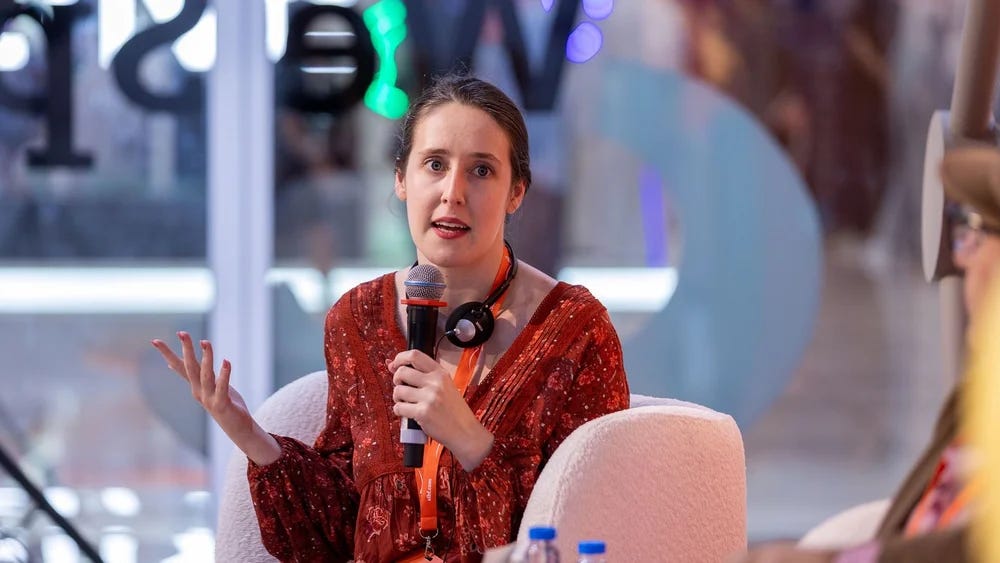
When Shelby Leigh began sharing her work online nine years ago, she hoped to learn how to market her products and connect with others in her space. What she may not have expected is that she’d go on to inspire hundreds of creatives and sell more than 60,000 books.
That experience led her to launch Marketing by Shelby, a platform that makes her marketing expertise accessible to artists, authors, entrepreneurs, and other creators.
But one thing that sets Leigh apart from many creatives in the marketing space is her advocacy for mental health. She has used social media to reach millions through her poetry, which explores topics such as anxiety, self-love and healing.
The bestselling author has also integrated mental health awareness into Marketing by Shelby, where she helps creatives navigate the impact of social media on their well-being.
Today, Leigh has written four successful books and worked with more than 9,000 students.
With over a decade of experience helping shape brands and a following of hundreds of thousands, she has become a trusted resource for many creatives.
Leigh has built her business around a simple philosophy: “Marketing isn’t a chore, but an extension of your creativity.”
In a conversation with EIN Presswire, Leigh shared how she got started in her career, her perspective on building brands and strategic communications, as well as insights for creatives.
Q: Tell us a bit about your path. What were you doing early on, and how did that lead to what you’re building today?
A: I studied Communications and PR in college, so marketing was always part of my world. After graduating, I worked in corporate social media and branding while also writing and self-publishing poetry books on the side. I was a marketing professional by day, soaking up everything I could about marketing, branding, PR and social media, and at night, I was an author trying to figure out how to sell books and pursue a passion I’d had since I was a young kid.
From there, I was applying what I knew about branding and social media to my own books, and it was working. Other authors started asking me how I was doing it, and I realized there was a real gap: creatives who were talented but had no idea how to market themselves without feeling like they were selling out. I started Marketing by Shelby shortly after leaving my corporate job to pursue my writing passion, and it just grew from there.
Q: Was there a moment when things started to gain momentum for your brand? Any milestones that stand out?
A: For a long time, it was more like a bunch of small wins that started adding up. As an author, hitting 500K followers was a cool milestone, but what actually felt meaningful was selling over 60,000 books, because I remembered selling two copies the very first week I self-published and spent many months wondering if anyone would ever care.
On the business side, one of my favorite milestones was when I launched my membership, The Creative’s Content Club. I had over 300 creatives join during launch week, which was beyond my wildest dreams. (My goal was 100 members!) I’ve now had over 9,000 students be a part of my programs. That’s a lot of creatives who decided to bet on themselves, and I don’t take that lightly.
Q: Looking ahead, what shifts in media, marketing, or audience behavior are you paying closest attention to right now?
A: A few things, honestly. I’m watching how tired people are getting of content that feels manufactured. Audiences are really good at detecting inauthenticity now, and I think that’s actually great news for creatives who are willing to just be real and show up. A lot of the creatives I work with are hesitant at first. They like to be behind-the-scenes and not be on camera, which I completely understand because I’ve been there. But with the rise of AI content, we need to show up as ourselves to stand out.
I’m also paying close attention to email. Everyone keeps counting it out and it keeps proving people wrong. For the people I work with, owning your list versus renting space on a platform is a conversation I’m having constantly. I love email marketing and I don’t think it’s going away anytime soon.
Q: From your perspective, what do creatives often get wrong when trying to build an audience or make their brand visible?
A: The biggest one is waiting too long to start. They want everything to be perfect before they put themselves out there, and that costs them so much time.
The other thing I see constantly is creatives trying to copy what big brands or influencers are doing instead of leaning into what actually makes them different. Your story, your voice, your specific way of seeing things is what builds a real audience. People don’t follow logos; they follow people. There’s a reason why big brands are now leaning into personal brands. And as small businesses, we have that personal edge that big brands don’t!
The other thing creatives get wrong is overdoing it, thinking they need to be everywhere, doing everything, all the time. They don’t. They need one clear message shared consistently to the right people. Being strong on 1-2 platforms is more impactful than trying to be on 5 platforms at once with a weak strategy.
Q: What’s one approach, habit, or strategy that’s been consistently effective for you as the industry evolves?
A: Storytelling, without question. Before I create anything — a caption, an email, a course lesson — I ask myself what the human moment is behind it. That’s what makes content actually connect, and it’s the one thing that doesn’t change no matter what the algorithm is doing.
Platforms shift, trends come and go, but people always want to feel understood. If your marketing is built around that, you’re going to be fine.
Q: What advice would you give to someone looking to build their audience?
A: Start before you feel ready, and be more honest than you think you’re supposed to be. The content that has actually moved the needle for me was never the most polished or perfect — it was the most honest or vulnerable. Like I said before, humans want to connect with other humans.
And think about your audience as actual people, not a number. Don’t ask, “How do I get more followers?” Ask, “How do I genuinely help the person already reading this? How can I make sure my ideal audience feels understood, inspired, or empowered by our brand?”
Also, and this is the one that a lot of people have a hard time hearing: give it more time than feels comfortable. Slow growth is still growth.